
Join Alfa HazardX
Build technology that helps detect hazards before they become incidents.
- 14Open positions
- 8Teams hiring
- 9Sensing channels shipped
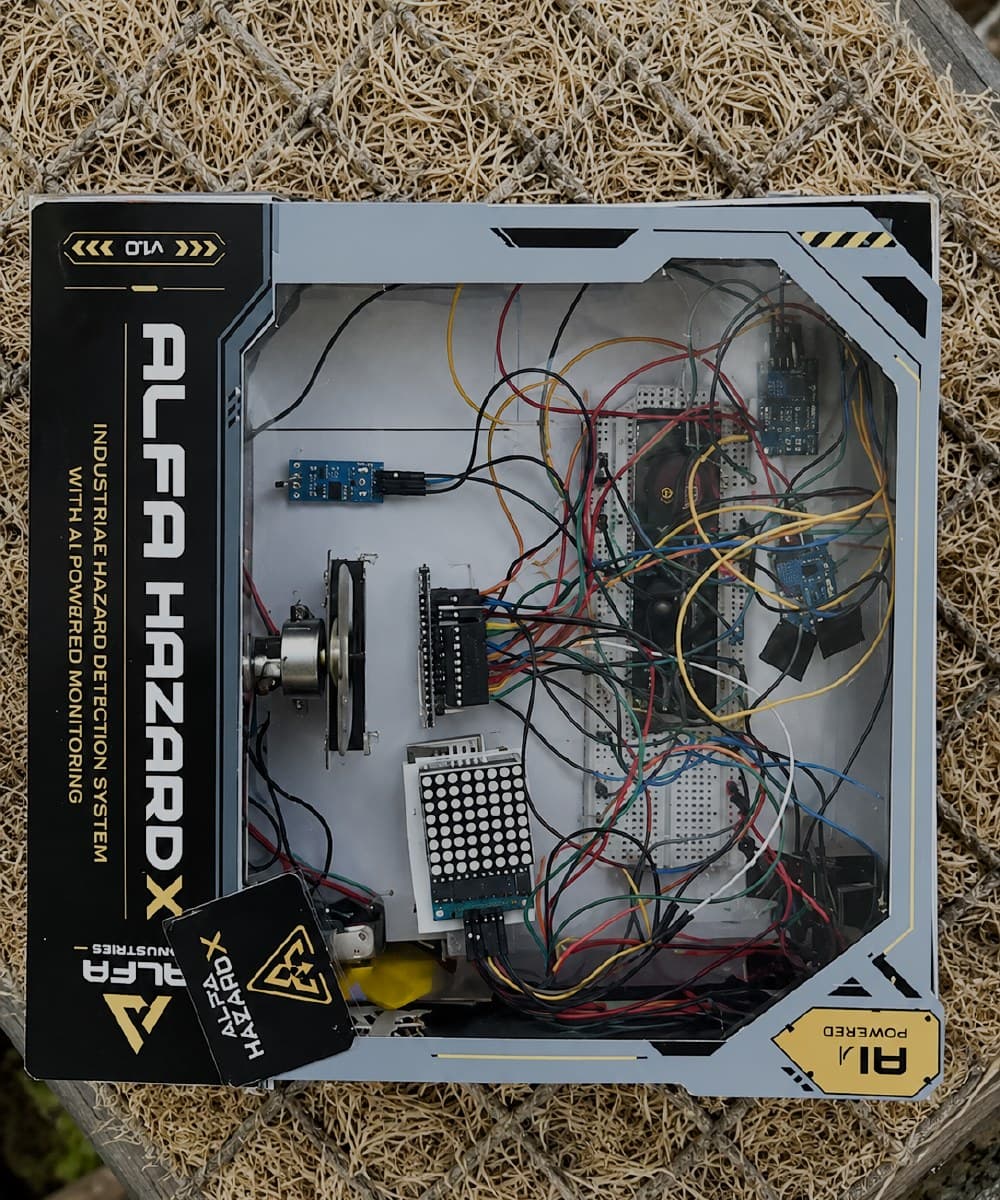
A safety node that
ships to real plants.
One industrial unit reads eleven hazard channels, recognises a hazard by how they are moving, and turns to find where it is coming from. It runs on working factory floors.
Your work leaves the building
What you ship gets mounted on a wall in a working plant.
Real ownership, early
Nobody here is the fifth person on a feature. You own a surface.
Hardware and software in one room
Firmware and dashboard sit within earshot of each other.
It counts when it goes off
An alarm people act on. That is why the bar is where it is.
How hiring runs
- 01You applyA person reads every application, including the stretches.
- 02A short callThirty minutes on what you have built. No trick questions.
- 03A real problemA scoped exercise from work we are actually doing. Paid if it runs long.
- 04Meet the teamYou see the bench, the nodes and the people. You ask the hard questions.
- 05OfferDecision within a week. We reply either way, always.
Pick the area you want to build in.
Matching every line is not the bar. Pick the track, pick a position, and show us something you built.
Product & Software
2 openBuild the dashboard operators watch on shift, and the ingest path every node posts to.
- Live monitoring, incident and investigation screens
- The ingest endpoint and the realtime path behind it
- Postgres schemas and access rules for multi-plant data
- Internal tools the field team runs a deployment on
- TypeScript
- Next.js
- Postgres
- Supabase
- Realtime
You own: A surface end to end, from schema to screen.
Embedded & Electronics
2 openWrite the firmware that decides, on the node itself, whether the buzzer goes off.
- field-node firmware across eleven sensing channels
- Local alarm logic that holds with the network down
- Sensor drivers, calibration curves and drift handling
- Over-the-air updates with a rollback that works
- C / C++
- Embedded firmware
- I2C / SPI
- PCB bring-up
- OTA
You own: One channel, from datasheet to dashboard.
AI & Data
1 openTurn eleven noisy channels into one risk score a supervisor actually trusts.
- Anomaly detection and per-site drift baselines
- The fused risk score, and the evaluation that proves it moved
- Time-series pipelines over real, messy plant data
- Showing a false-alarm rate fell rather than claiming it
- Python
- Time series
- Anomaly detection
- SQL
- Model eval
You own: The number people act on.
Hardware & Mechanical
2 openDesign the enclosure that keeps dust out, lets air in, and turns a dead sensor into a five-minute swap.
- Enclosures and sensor trays through to manufacturable drawings
- IP65 sealing, thermal behaviour and vibration validation
- Vendor tooling, finishing and assembly
- Serviceability held as a design constraint
- SolidWorks / Fusion
- DFM
- Tolerancing
- IP65
- Thermal
You own: The part in your hand, and the one that replaces it.
Automation & Controls
1 openWire our detection into the plant's own controls, so a critical reading can stop a machine.
- PLC and SCADA integration on customer sites
- Interlock and shutdown logic, designed with plant engineers
- Modbus and relay interfaces for the next hardware revision
- Commissioning, and handover documentation that holds up
- PLC / SCADA
- Modbus
- Ladder
- Interlocks
- Relay logic
You own: The path from a reading to a machine stopping.
Field Ops & Quality
3 openPlace the nodes, tune the thresholds, and leave behind the evidence that the system works.
- Site surveys and the call on where detection needs to be
- Commissioning, and training the shift teams who use it
- Threshold tuning against each plant's real baseline
- Test plans, calibration records and certification
- Site survey
- Commissioning
- Calibration
- IS / IEC
- Documentation
You own: A plant that trusts the system on day one.
Product Design
1 openDesign screens read at a glance, mid-shift, by someone with ten seconds to decide.
- Operator and admin surfaces, end to end
- The design system, extended rather than bypassed
- Dense sensor data made legible without dumbing it down
- Rough versions put in front of real users early
- Figma
- Design systems
- Interaction
- Data viz
- Prototyping
You own: How the product reads under pressure.
Business & People
2 openGet HazardX onto more factory floors, and build the team that keeps shipping it.
- Pilots with manufacturing and process plants across India
- Proposals, commercials and the follow-up behind them
- Hiring loops that are fair and actually predictive
- Onboarding that has a new joiner shipping in a fortnight
- B2B / industrial
- Pilots
- Sourcing
- Interview design
- Ops
You own: The next twenty customers, and the next twenty people.
Nothing here fits? and tell us what we should be hiring for.
Tell us what you have built.
Four short steps. No cover letter, no keyword filter - a person reads every word.
Ready to build with us?
One application, read by a person, answered either way. Worth skimming the hiring policy first.
Apply to HazardXQuestions: agresh@agreshagrawal.com